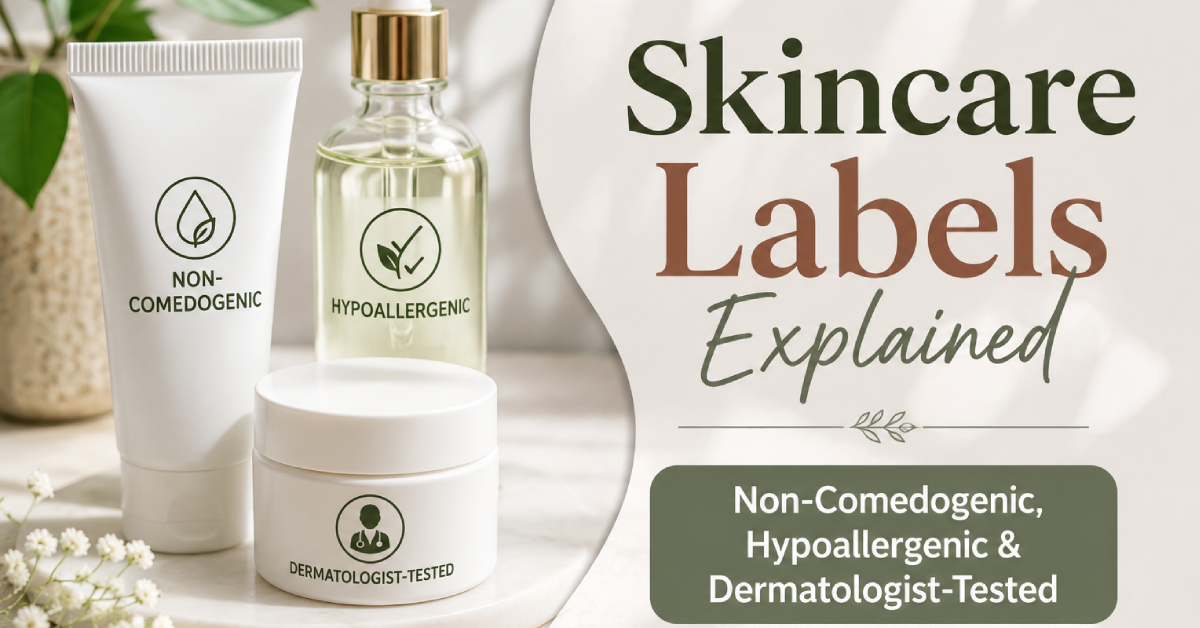
Skincare Labels Explained is essential for anyone who wants to choose the right skincare products with confidence. Shopping for skincare products can feel confusing because many cleansers, moisturizers, and serums feature labels like “Non-Comedogenic,” “Hypoallergenic,” and “Dermatologist-Tested.” While these terms sound reassuring, they don’t always mean the same thing, and understanding them can help you make better skincare decisions.
Instead of choosing products based only on attractive packaging or marketing claims, it’s important to understand what these labels actually tell you. Learning how to read skincare labels can help you select products that match your skin type, avoid ingredients that may cause irritation or breakouts, and make informed choices for healthier skin.
In this guide, we’ll explain the meaning of common skincare labels, when they matter, and how to use them to make smarter purchasing decisions.
Why Skincare Labels Matter
Skincare labels are designed to provide useful information about a product’s formulation and intended use. However, they shouldn’t be the only factor you consider before buying.
A product may carry several claims on the front of its packaging, but the ingredient list often provides a more complete picture.
That’s why Product Awareness Skincare is becoming increasingly important. Understanding labels helps you choose products based on ingredients and your skin’s needs instead of relying only on marketing language.
What Does Non-Comedogenic Mean?
The term non-comedogenic means a product is formulated to reduce the likelihood of clogging pores.
Clogged pores are one of the factors that can contribute to blackheads, whiteheads, and acne. While no product can guarantee that it won’t cause breakouts for every person, non-comedogenic products are generally designed with lightweight ingredients that are less likely to block pores.
These products are often recommended for:
- Oily skin
- Combination skin
- Acne-prone skin
- People who experience frequent clogged pores
If you have breakouts, learning about Ingredients for Acne-Prone Skin can help you choose products that support clearer-looking skin.
What Does Hypoallergenic Mean?
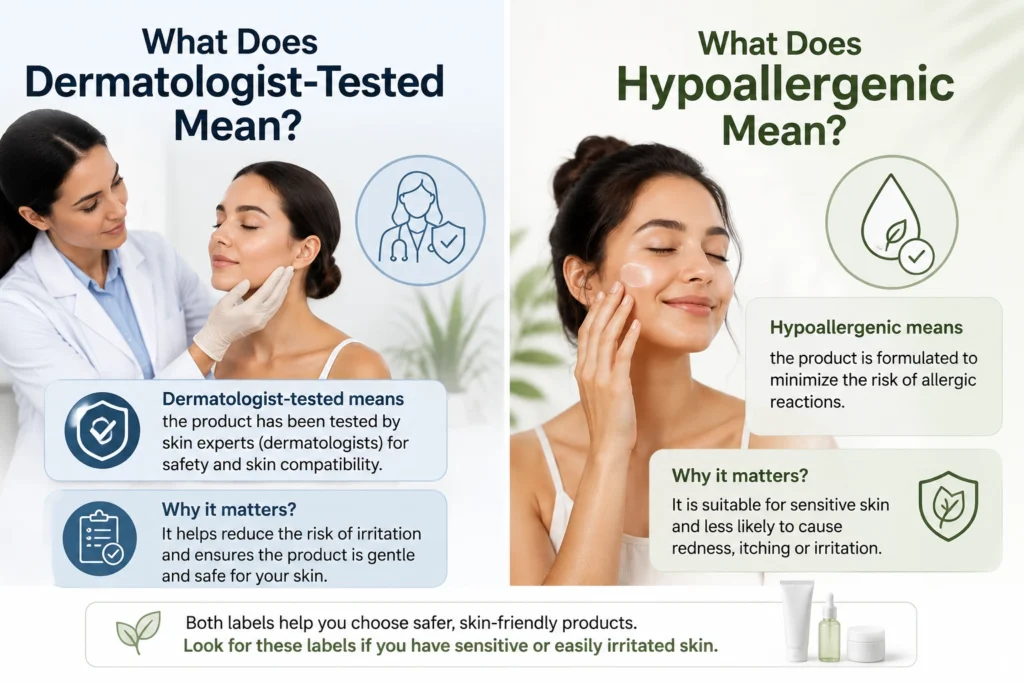
The label hypoallergenic indicates that a product is formulated to reduce the chance of causing allergic reactions.However, it’s important to understand that there is no universal standard for this claim.
A hypoallergenic product may still cause irritation or allergies in some individuals because everyone’s skin reacts differently.
People who may benefit from hypoallergenic skincare include:
- Sensitive skin
- Dry skin
- Easily irritated skin
- People with a history of cosmetic allergies
Even when using hypoallergenic products, patch testing is a good habit before applying a new product to your entire face.
What Does Dermatologist-Tested Mean?
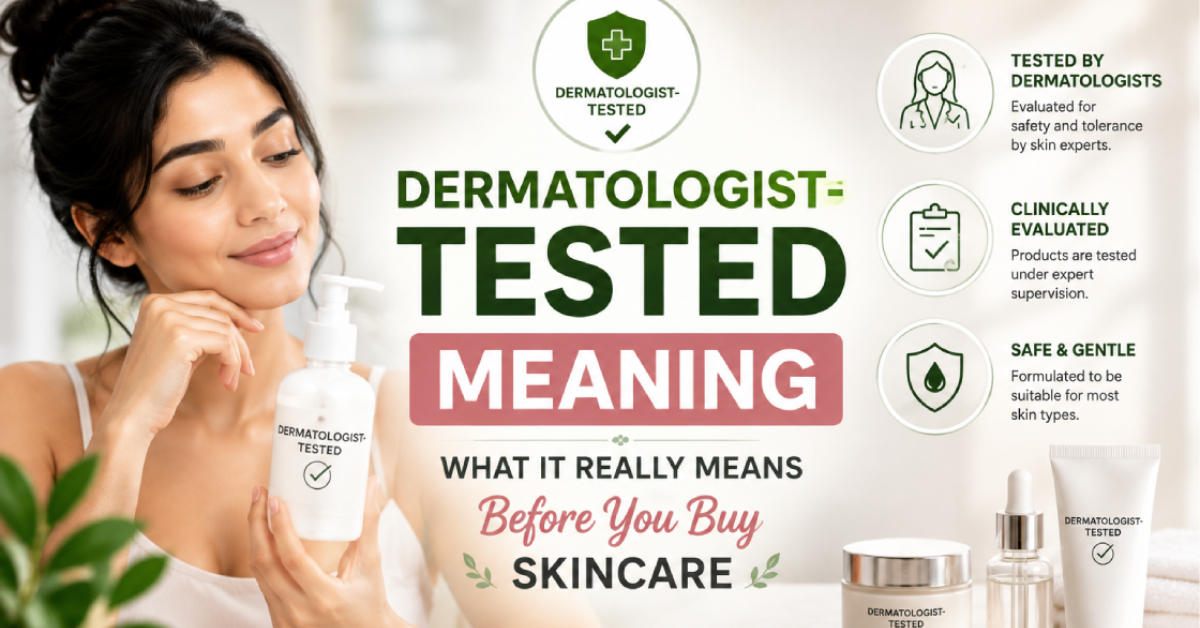
Dermatologist-tested means a skincare product has been evaluated under the supervision of a dermatologist to assess how it performs on the skin. However, this label does not guarantee that the product is safe for everyone, allergy-free, or suitable for every skin type. According to the American Academy of Dermatology (AAD), it’s important to read the full ingredient list and choose products based on your individual skin concerns rather than relying on marketing claims alone.
Comparison Table: Understanding Common Skincare Labels
| Label | What It Means | Best For | Important Note |
|---|---|---|---|
| Non-Comedogenic | Formulated to reduce the risk of clogged pores | Oily and acne-prone skin | Does not guarantee zero breakouts |
| Hypoallergenic | Designed to reduce the risk of allergic reactions | Sensitive skin | Individual reactions can still occur |
| Dermatologist-Tested | Tested under dermatologist supervision | Most skin types | Does not mean dermatologist-approved |
Understanding these differences helps you interpret product labels more accurately and avoid common misconceptions.
Why Reading the Ingredient List Is Still Important
Front-label claims provide useful information, but the ingredient list tells you what is actually inside the product.
Before buying skincare, take a few moments to:
- Read the first several ingredients.
- Check for ingredients that suit your skin type.
- Look for unnecessary fragrance if your skin is sensitive.
- Identify active ingredients.
- Compare products instead of relying on marketing claims.
Developing the habit of reading labels can help you make more informed skincare choices over time.
Build Your Routine Around Your Skin Type
No single skincare label works best for everyone.
Someone with dry skin may benefit from rich, hydrating ingredients, while oily or acne-prone skin often responds better to lightweight, non-comedogenic products.
If you’re just getting started, following a Beginner Skincare Guide can help you build a simple routine without overwhelming your skin.
Choosing products based on your skin’s individual needs is often more effective than following trends or buying products simply because they include popular labels.
Expert Tip
Think of skincare labels as helpful guidance not guarantees.
The best skincare product is one that suits your skin type, contains appropriate ingredients, and fits into a consistent routine. Reading labels carefully and understanding ingredient lists will always help you make better decisions than relying on marketing claims alone.
Fragrance-Free vs Unscented Skincare
- Many people think fragrance-free and unscented mean the same thing, but there is an important difference.
- A fragrance-free product contains no added fragrance ingredients. It may still have a natural scent from its ingredients.
- An unscented product has little or no noticeable smell, but it may contain masking ingredients that neutralize odors.
If you have sensitive skin, learning the difference between Fragrance-Free vs Unscented Skincare can help you choose products that are less likely to cause irritation.
Look Beyond the Front Label
Product labels can be helpful, but they shouldn’t be the only reason you choose a skincare product.
Before purchasing, consider these factors:
- Your skin type
- The complete ingredient list
- Product texture
- Active ingredients
- Expiration date
- Your previous experience with similar products
Understanding How to Read Skincare Labels helps you evaluate products more confidently instead of relying only on marketing terms.
What Makes a Good Skincare Product?
A good skincare product isn’t defined by a single label.Instead, look for products that contain well-researched ingredients and match your skin’s needs.
Many dermatologists recommend looking for ingredients such as:
- Ceramides
- Glycerin
- Hyaluronic acid
- Niacinamide
- Panthenol
- Aloe vera
These ingredients are commonly included in a Safe Skincare Ingredients list because they help support the skin barrier and maintain hydration.
Common Myths About Skincare Labels
Understanding a few common myths can help you make smarter skincare choices.
Myth 1: Non-comedogenic products never cause acne.
- No product can guarantee that it won’t cause breakouts. Everyone’s skin responds differently.
Myth 2: Hypoallergenic means allergy-proof.
- Hypoallergenic products are formulated to reduce the likelihood of allergic reactions, but individual sensitivities can still occur.
Myth 3: Dermatologist-tested means dermatologist-approved.
- These terms are not the same. Dermatologist-tested simply means the product was tested under dermatologist supervision.
Myth 4: Expensive products always have better ingredients.
- Price alone doesn’t determine product quality. Always review the ingredient list before purchasing.
Smart Tips for Choosing Skincare Products
Making informed decisions is easier when you follow a few simple habits.
- Read the complete ingredient list.
- Match products to your skin type.
- Introduce one new product at a time.
- Perform a patch test.
- Avoid buying products based only on packaging.
- Compare ingredients instead of marketing claims.
A simple skincare routine with suitable ingredients is often more effective than using many products at once.
Build Product Awareness
Developing Product Awareness Skincare means understanding what you’re putting on your skin instead of following trends.
Before buying any skincare product, ask yourself:
- Does it suit my skin type?
- Are the ingredients appropriate?
- Do I understand the product claims?
- Is the product from a trusted seller?
These simple questions can help you avoid unnecessary purchases and choose products more confidently.
Buy Authentic Products
Even a well-formulated skincare product won’t provide the expected results if it’s counterfeit.
Before purchasing:
- Buy from trusted retailers.
- Check packaging carefully.
- Compare labels with official product images.
- Verify batch information when available.
Learning How to Identify Fake Products is another important step toward making safer skincare purchases.
Final Thoughts
Understanding Skincare Labels Explained makes it easier to choose products that suit your skin. Terms like non-comedogenic, hypoallergenic, and dermatologist-tested provide useful information, but they should always be considered alongside the ingredient list.
Focus on products that match your skin type, contain gentle ingredients, and fit into a simple, consistent routine. Reading labels carefully and making informed choices can help you build healthier skincare habits over time.
Frequently Asked Questions
1. What does non-comedogenic mean?
It means the product is formulated to reduce the likelihood of clogging pores, making it a popular choice for oily and acne-prone skin.
2. Does hypoallergenic mean allergy-free?
No. It means the product is designed to reduce the risk of allergic reactions, but no product can guarantee that everyone will avoid irritation.
3. What does dermatologist-tested mean?
It means the product was tested under the supervision of a dermatologist. It does not necessarily mean every dermatologist recommends it.
4. Should I trust skincare labels?
Skincare labels are helpful, but you should also read the full ingredient list and choose products based on your skin type.
5. Is fragrance-free better than unscented?
For people with sensitive skin, fragrance-free products are often preferred because they do not contain added fragrance ingredients.
6. How can I choose safer skincare products?
Read ingredient lists, understand common skincare labels, perform patch tests, and select products that suit your skin’s individual needs.
7. Why is reading skincare labels important?
It helps you understand what a product contains, compare formulations, and make informed decisions instead of relying only on marketing claims.