Walk into any skincare store, and you’ll probably notice products labeled “Fragrance-Free” and “Unscented.“ At first glance, these terms seem to mean the same thing. However, they describe two different types of skincare products, and understanding the difference can help you make better choices for your skin.
Many people buy products based on front-label claims without checking the ingredient list. As a result, they may accidentally choose products that contain ingredients capable of irritating sensitive skin. Learning how product labels work is one of the easiest ways to build a healthier skincare routine.
Whether you have oily, dry, combination, or sensitive skin, knowing the difference between Unscented Skincare and fragrance-free products can help you avoid unnecessary irritation and choose products that match your skin’s needs.
If you’re new to skincare, it’s also worth learning How to Read Skincare Labels before buying any new product. Understanding ingredient lists helps you identify beneficial ingredients and avoid those that may not suit your skin.
In this guide, we’ll explain what these labels really mean, when each option is appropriate, and how to shop more confidently.
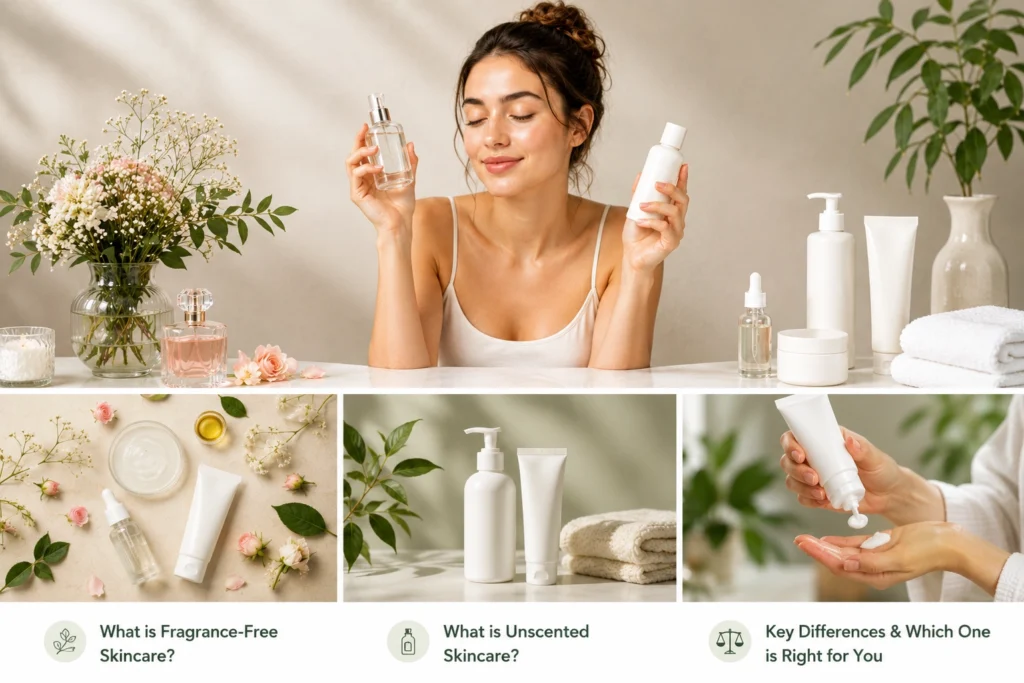
Why Understanding Skincare Labels Matters
Modern skincare products contain dozens of ingredients, and the wording on the front of the bottle doesn’t always tell the full story.
For example, a product labeled “unscented” may still contain ingredients that affect fragrance. Likewise, a product that smells slightly herbal may still be fragrance-free because the scent comes naturally from its ingredients rather than added perfume.
This is why dermatologists encourage consumers to read ingredient lists instead of relying only on marketing terms. Taking a few extra moments to check labels can help reduce the risk of irritation, especially if you have sensitive or acne-prone skin.
What Does Fragrance-Free Mean?
A fragrance-free skincare product is made without added fragrance ingredients whose purpose is to create a pleasant scent.
The product may still have a mild smell because some skincare ingredients naturally have their own scent. Plant extracts, oils, and active ingredients can all contribute to a product’s natural aroma.
Fragrance-free products are often recommended for:
- Sensitive skin
- Dry skin
- Skin prone to redness
- People with fragrance allergies
- Those using exfoliating acids or retinoids
Many dermatologists recommend fragrance-free products because fewer unnecessary ingredients often mean a lower chance of irritation.
What Does Unscented Skincare Mean?
Many people find this term confusing. Here’s what unscented skincare actually means:
- Unscented does not always mean fragrance-free.
- It means the final product has little or no noticeable smell.
- Some unscented products contain masking ingredients that neutralize the natural scent of other ingredients.
- These masking ingredients may themselves be fragrance compounds.
Reading the ingredient list remains the best way to understand what’s inside a product.
Fragrance-Free vs Unscented: What’s the Difference?
Although these terms are often used interchangeably, they have different meanings.
The table below summarizes the main differences.
| Feature | Fragrance-Free | Unscented |
|---|---|---|
| Added fragrance | No | May contain masking fragrance |
| Product smell | May have a natural scent | Little or no scent |
| Suitable for sensitive skin | Usually yes | Depends on ingredients |
| Risk of irritation | Generally lower | Varies by formulation |
| Best for | Sensitive, dry, and reactive skin | People who prefer products without noticeable scent |
The most important takeaway is that “fragrance-free” refers to the ingredients used, while “unscented” describes the finished product’s smell.
Which Option Is Better for Sensitive Skin?
If your skin reacts easily to skincare products, fragrance-free products are generally the safer choice.
Added fragrance is one of the most common causes of cosmetic skin irritation. While not everyone experiences problems, people with eczema, rosacea, or sensitive skin may notice redness, itching, or discomfort after using heavily fragranced products.
If you have acne, choosing gentle products can also help protect your skin barrier. You can learn more by exploring Ingredients for Acne-Prone Skin, which explains ingredients that support clearer skin without unnecessary irritation.
People who are just beginning a skincare routine should also choose gentle cleansing products. Understanding the difference between face wash and cleanser makes it easier to select a cleanser that suits your skin type.
Why Fragrance Can Sometimes Irritate Skin
Not all fragrances are harmful, but some ingredients used to create scents may trigger irritation in certain individuals.
This is especially true if your skin barrier is already weakened.
Possible reactions include:
- Redness
- Itching
- Dryness
- Burning sensation
- Increased skin sensitivity
People with healthy skin may never experience these issues, while others may notice irritation after only a few uses.
This is why skincare recommendations should always be based on your individual skin type rather than trends.
Expert Tip
- Don’t choose skincare products based only on attractive packaging or marketing claims.
- Read the complete ingredient list before making a purchase.
- Choose products that suit your skin type and individual needs.
- Pay attention to how your skin responds over time.
- Follow a simple routine with well-chosen ingredients instead of using too many products at once.
Ingredients to Look for in Gentle Skincare
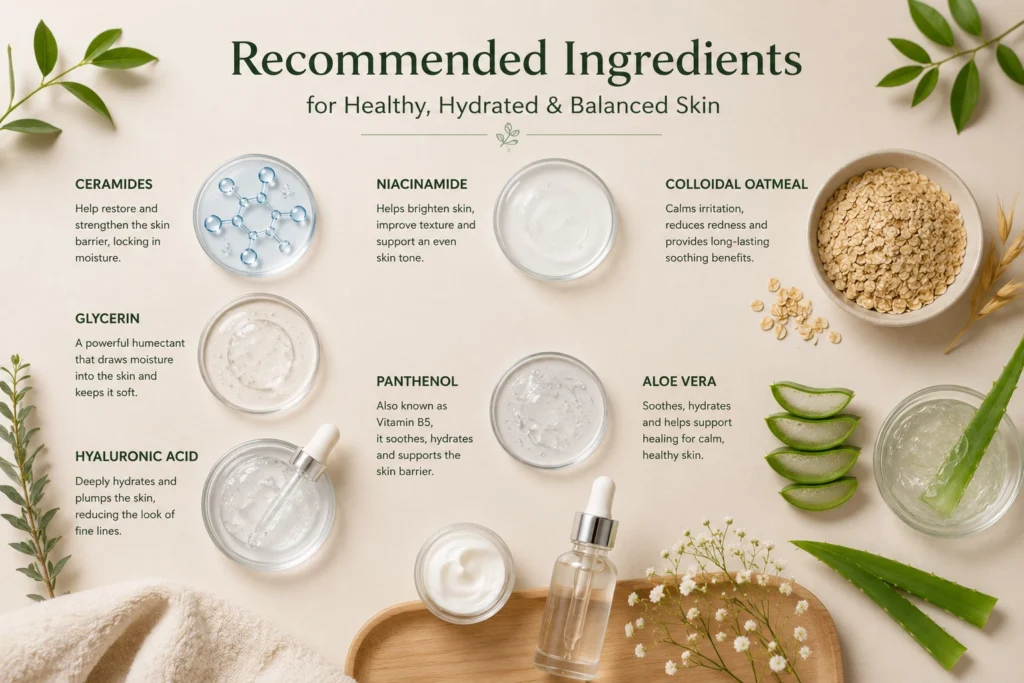
Whether you choose fragrance-free or Unscented Skincare, the ingredient list is still the most important part of the product.Look for ingredients that help protect your skin barrier and keep your skin hydrated.
Some commonly recommended ingredients include:
- Ceramides
- Glycerin
- Hyaluronic acid
- Niacinamide
- Panthenol
- Colloidal oatmeal
- Aloe vera
These ingredients are often included in a Safe Skincare Ingredients List because they help maintain moisture and reduce the risk of irritation.
If you’re interested in plant-based skincare, a Clean Beauty Ingredients List can also help you understand which naturally derived ingredients may support healthy skin. Keep in mind that “natural” does not always mean suitable for everyone, so patch testing is still important.
Ingredients to Be Careful
Not every ingredient works well for every skin type.
If your skin is easily irritated, consider checking whether products contain:
- Artificial fragrance (Parfum)
- High concentrations of drying alcohol
- Harsh physical exfoliants
- Strong essential oils
- Unnecessary color additives
These ingredients may not cause problems for everyone, but they can increase the likelihood of irritation in some people.
Learning about Ingredients to Avoid in Skincare Products can help you make more informed decisions before purchasing new skincare products.
Who Should Choose Fragrance-Free Products?
Fragrance-free skincare may be especially suitable for people who have:
- Sensitive skin
- Dry skin
- Acne-prone skin
- Rosacea
- Eczema
- A damaged skin barrier
People using exfoliating acids, retinoids, or prescription acne treatments may also benefit from reducing unnecessary fragrance exposure because these treatments can temporarily increase skin sensitivity.
Common Myths About Fragrance-Free and Unscented Skincare
Many skincare myths continue to circulate online. Here are some of the most common misunderstandings.
Myth 1: Fragrance-free products have no smell.
Not always.
- A fragrance-free product can still have a natural scent from its ingredients.
Myth 2: Unscented products never contain fragrance.
Incorrect.
- Some Unscented Skincare products contain masking ingredients that neutralize odors.
Myth 3: Natural fragrances are always safer.
Not necessarily.
- Essential oils and botanical extracts can also trigger irritation in some individuals.
Myth 4: Expensive skincare is automatically fragrance-free.
Price doesn’t determine ingredient quality.
- Always read the ingredient list instead of relying on marketing claims.
Tips for Choosing the Right Skincare Product
Choosing skincare becomes much easier when you focus on ingredients instead of packaging.
Here are a few practical tips:
- Read the full ingredient list.
- Choose products designed for your skin type.
- Introduce one new product at a time.
- Perform a patch test before regular use.
- Avoid changing your entire routine at once.
- Pay attention to how your skin responds over several weeks.
A simple routine is often easier to maintain and helps you identify which products are working.
Buy Skincare Products Carefully

Authentic products are just as important as choosing the right ingredients.
Counterfeit skincare products may contain incorrect ingredient lists, poor-quality formulations, or unknown substances.
Before purchasing online:
- Buy from trusted retailers.
- Check packaging quality.
- Compare labels with the manufacturer’s official images.
- Verify batch information when available.
Knowing How to Identify Fake Products can help you avoid counterfeit skincare and make safer purchasing decisions.
Building a Skin-Friendly Routine
Healthy skin isn’t about using the highest number of products.
Instead, focus on a routine that includes:
- A gentle cleanser
- A suitable moisturizer
- Daily sunscreen
- Targeted treatment products only when needed
If you’re unsure about cleansing products, understanding the Face Wash vs Cleanser Difference can help you choose the right option for your skin.
People with breakouts may also benefit from learning more about Ingredients for Acne-Prone Skin before introducing acne treatments.
Final Thoughts
Understanding the difference between Unscented Skincare and fragrance-free products helps you make smarter skincare choices. Fragrance-free products contain no added fragrance, while unscented products may still include masking ingredients to remove scent.
Always read ingredient labels, choose products that suit your skin type, and introduce new products gradually. A simple routine with gentle, well-chosen ingredients can help maintain a healthy skin barrier and reduce the risk of irritation.
Frequently Asked Questions
1. Is fragrance-free the same as unscented skincare?
No. Fragrance-free products contain no added fragrance ingredients, while Unscented Skincare products may contain masking ingredients that remove or neutralize scent.
2. Which is better for sensitive skin?
Fragrance-free products are generally considered a better option because they usually contain fewer potential fragrance-related irritants.
3. Can unscented skincare still cause irritation?
Yes. Some unscented products contain masking fragrance ingredients that may not suit everyone.
4. How can I tell if a product is fragrance-free?
Read the ingredient list carefully. Avoid relying only on front-label claims and check whether fragrance or parfum is listed.
5. Are essential oils considered fragrance?
Some essential oils are used to add scent to skincare products. Although they are naturally derived, they can still irritate sensitive skin.
6. Should people with acne-prone skin avoid fragrance?
Not everyone with acne reacts to fragrance, but many dermatologists recommend gentle, fragrance-free products because acne treatments can make the skin more sensitive.
7. Is fragrance-free skincare always better?
Not necessarily. The best choice depends on your skin type, individual sensitivities, and the overall formulation of the product.
8. What ingredients should I look for in gentle skincare?
Ceramides, glycerin, niacinamide, hyaluronic acid, panthenol, and aloe vera are commonly used to support hydration and strengthen the skin barrier.