Healthy skin starts with a strong skin barrier. This outermost layer of your skin acts like a protective shield, helping to lock in moisture while keeping out pollution, bacteria, and other environmental irritants. When this barrier becomes weak or damaged, your skin may start showing signs that are easy to overlook.
A damaged skin barrier can make your skin feel dry, sensitive, irritated, or rough, even if you’re using expensive skincare products. In many cases, the problem isn’t the products themselves it’s that your skin barrier needs time and the right care to recover.
Many people unintentionally damage their skin by over-exfoliating, using too many active ingredients, or following complicated skincare routines. Returning to a Simple Skincare Routine with gentle, barrier-supporting ingredients is often the first step toward healthier skin.
If you’re new to skincare, following a Daily Skincare Routine designed for your skin type can also help protect your skin barrier and prevent future damage.
In this guide, you’ll learn the most common signs of a damaged skin barrier, why it happens, and the first steps you can take to support skin barrier repair.

What Is the Skin Barrier?
The skin barrier, also called the moisture barrier, is the outer layer of your skin. It helps your skin:
- Retain moisture
- Protect against bacteria
- Defend against pollution
- Reduce water loss
- Prevent irritation from external factors
When the barrier is healthy, your skin feels smooth, hydrated, and comfortable. When it’s damaged, everyday products and environmental factors may cause discomfort.
What Causes a Damaged Skin Barrier?
Several everyday habits can weaken your skin barrier.
Common causes include:
- Over-exfoliating
- Using harsh cleansers
- Frequent use of strong acids or retinoids
- Hot showers
- Excessive sun exposure
- Dry weather
- Using too many skincare products at once
Understanding these triggers can help you prevent further irritation and support faster recovery.
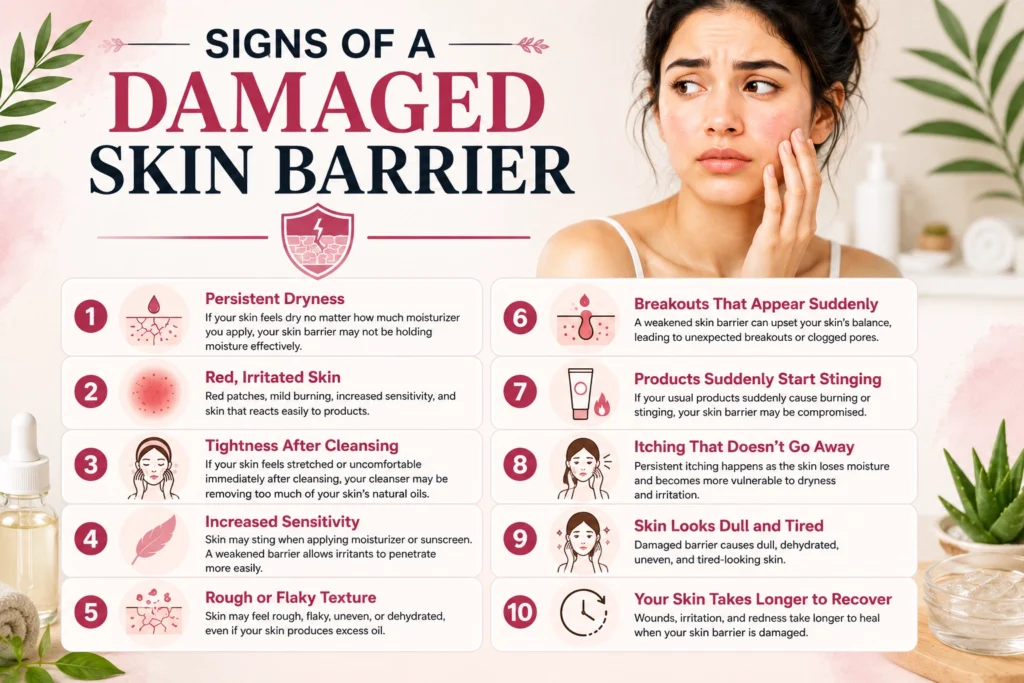
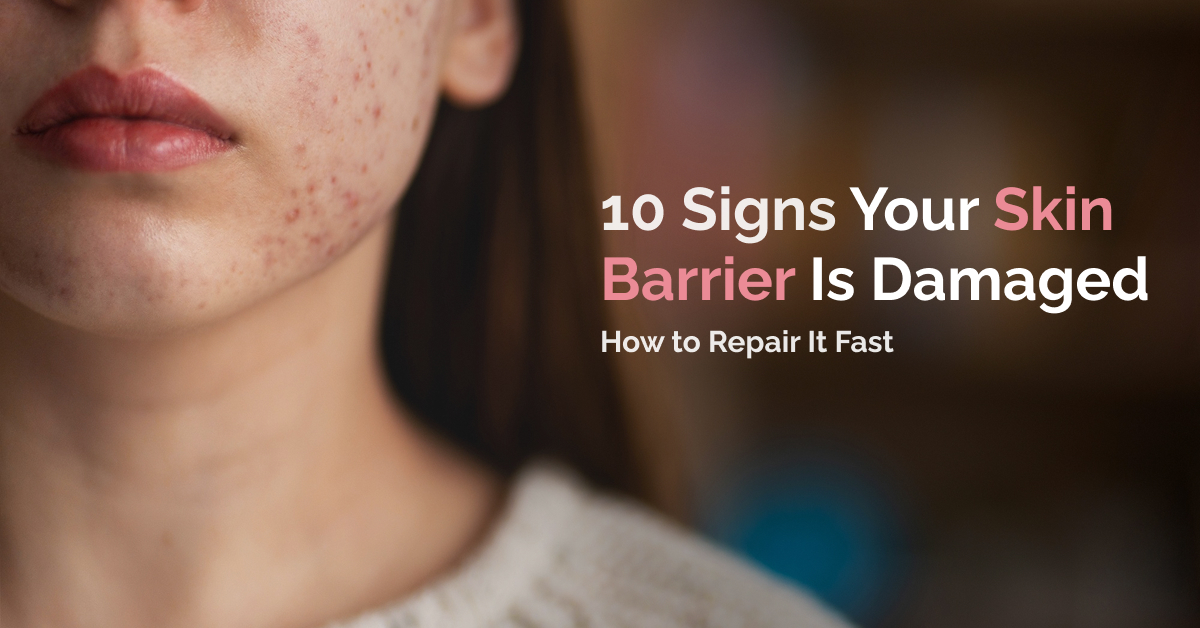
Signs of a Damaged Skin Barrier
The symptoms aren’t always obvious at first. Here are the first five signs to watch for.
1. Persistent Dryness
If your skin feels dry no matter how much moisturizer you apply, your skin barrier may not be holding moisture effectively.
Instead of staying hydrated, water escapes through the skin more easily.
2. Red, Irritated Skin
One of the most common signs of a damaged skin barrier is red irritated skin.
You may notice:
- Red patches
- Mild burning
- Increased sensitivity
- Skin that reacts easily to products
Even products you’ve used for years may suddenly cause irritation.
3. Tightness After Cleansing
- Your face shouldn’t feel overly tight after washing.
- If your skin feels stretched or uncomfortable immediately after cleansing, your cleanser may be removing too much of your skin’s natural protective oils.
- Gentle cleansing is an important part of skin barrier repair.
4. Increased Sensitivity
- Does your skin sting when applying moisturizer or sunscreen?
- When the barrier is weakened, everyday skincare products may feel uncomfortable because irritants can penetrate the skin more easily.
- This is often one of the earliest warning signs.
5. Rough or Flaky Texture
A damaged barrier often causes the skin to lose its smooth texture.
Instead, your skin may feel:
- Rough
- Flaky
- Uneven
- Dehydrated
These symptoms may appear even if your skin produces excess oil.
6. Breakouts That Appear Suddenly
- A weakened skin barrier can upset your skin’s natural balance. As a result, some people experience unexpected breakouts or clogged pores.
- This doesn’t always mean your skin is oily. In many cases, irritation and inflammation contribute to blemishes.
7. Products Suddenly Start Stinging
- If your usual moisturizer, cleanser, or sunscreen suddenly causes a burning or stinging sensation, your skin barrier may be compromised.
- Healthy skin should tolerate gentle skincare products without discomfort.
8. Itching That Doesn’t Go Away
- Persistent itching is another common sign of a damaged skin barrier.
- As the skin loses moisture, it becomes more vulnerable to dryness and irritation, leading to an itchy feeling throughout the day.
9. Skin Looks Dull and Tired
A healthy skin barrier reflects light evenly, giving your skin a naturally radiant appearance.
When the barrier is damaged, your skin may appear:
- Dull
- Dehydrated
- Uneven
- Tired-looking
Hydration and barrier repair can gradually restore a healthier glow.
10. Your Skin Takes Longer to Recover
- Minor irritation, redness, or dryness that lingers for days may indicate your skin barrier isn’t functioning properly.
- Healthy skin usually recovers more quickly from everyday environmental stress.
Quick Reference Table
| Sign | What You May Notice | Possible Cause |
|---|---|---|
| Persistent dryness | Skin feels dry all day | Moisture loss |
| Red irritated skin | Redness and sensitivity | Weak skin barrier |
| Tightness after cleansing | Uncomfortable feeling | Harsh cleanser |
| Increased sensitivity | Stinging from products | Barrier damage |
| Rough or flaky skin | Uneven texture | Dehydration |
Why does a simple routine work better?
When your skin barrier is damaged, using more products doesn’t usually solve the problem. Instead, simplify your routine by focusing on gentle cleansing, hydration, and sun protection. A Simple Skincare Routine gives your skin time to recover without exposing it to unnecessary active ingredients.
If you’re unsure where to start, following a consistent Daily Skincare Routine with mild, fragrance-free products is often more beneficial than constantly changing products.
Expert Tip
- A damaged skin barrier doesn’t heal overnight. Skin renewal takes time, so consistency is more important than using multiple treatments.
- Reducing unnecessary irritation and supporting your skin with gentle ingredients can help restore its natural protective function over time.
How to Repair a Damaged Skin Barrier?
If you’re wondering how to repair a damaged skin barrier naturally, the goal is to reduce irritation and support your skin while it heals.
Start with these simple steps:
- Use a gentle cleanser.
- Apply a fragrance-free moisturizer.
- Wear sunscreen every day.
- Avoid over-exfoliating.
- Reduce the use of strong active ingredients.
- Keep your skincare routine simple and consistent.
A simple skincare routine often gives your skin the best chance to recover.
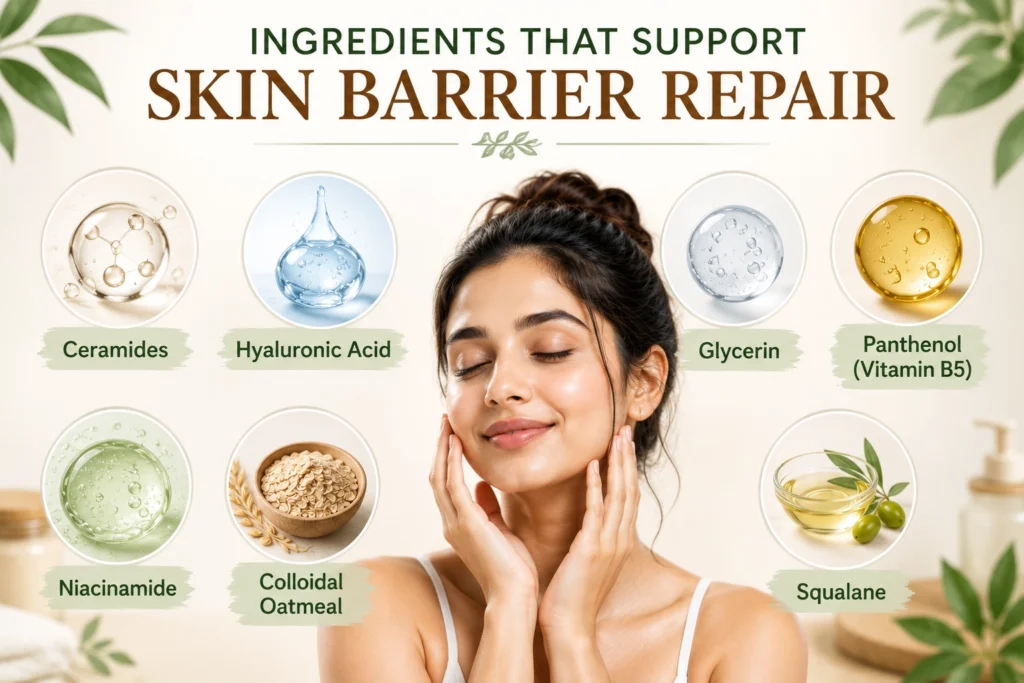
Ingredients That Support Skin Barrier Repair
Certain ingredients help strengthen the skin barrier and improve hydration.
| Ingredient | How It Helps |
|---|---|
| Ceramides | Restore the skin barrier and reduce moisture loss |
| Hyaluronic Acid | Attracts and retains moisture |
| Glycerin | Keeps skin hydrated and soft |
| Panthenol (Vitamin B5) | Calms irritation and supports healing |
| Niacinamide | Strengthens the barrier and reduces redness |
| Colloidal Oatmeal | Soothes sensitive, irritated skin |
| Squalane | Locks in moisture without feeling greasy |
These ingredients are commonly found in products designed for skin barrier repair and sensitive skin.
Ingredients to Avoid While Your Skin Barrier Heals
While your skin is recovering, it’s best to avoid ingredients that may increase irritation.
Some common ingredients to avoid in skincare include:
- High concentrations of alcohol
- Artificial fragrance
- Harsh physical scrubs
- Strong exfoliating acids used too frequently
- Essential oils if your skin is very sensitive
Learning about harmful ingredients in skincare can help you choose gentler products during the healing process.
Choose Gentle, Non-Toxic Skincare Products
- When your skin barrier is damaged, simpler formulations are often a better choice.
- Look for non-toxic skincare products that contain skin-supporting ingredients and avoid unnecessary irritants.
- Instead of chasing trends, focus on products that help maintain hydration and strengthen your skin’s natural protective barrier.
Final Thoughts
A damaged skin barrier can cause dryness, redness, irritation, and increased sensitivity, but it usually improves with the right care and consistency.Instead of using multiple active ingredients, focus on skin barrier repair by choosing gentle products, avoiding unnecessary irritants, and following a simple skincare routine.
Healthy skin takes time to recover. Supporting your skin with hydrating ingredients and protecting it from further damage can help restore its strength and comfort over time.
Frequently Asked Questions
1. What are the first signs of a damaged skin barrier?
Common signs include persistent dryness, red irritated skin, tightness after cleansing, increased sensitivity, and flaky skin.
2. How long does skin barrier repair take?
For mild damage, improvement may be noticeable within two to four weeks. More severe damage can take longer, depending on your skin and routine.
3. How can I repair a damaged skin barrier?
Use a gentle cleanser, apply a moisturizer with barrier-supporting ingredients, wear sunscreen daily, and avoid over-exfoliating or using too many active ingredients.
4. Which ingredients help repair the skin barrier?
Ceramides, hyaluronic acid, glycerin, panthenol, niacinamide, squalane, and colloidal oatmeal are commonly used to support skin barrier repair.
5. Which ingredients should I avoid?
Avoid products with high amounts of alcohol, artificial fragrance, harsh scrubs, and excessive exfoliating acids while your skin heals.
6. Can a damaged skin barrier cause acne?
Yes. A weakened skin barrier can increase irritation and inflammation, which may contribute to breakouts in some people.
7. Can I use active ingredients while repairing my skin barrier?
If your skin is very irritated, it’s often best to reduce or pause strong active ingredients until your barrier has recovered.