Many people avoid skincare products as soon as they see the word “alcohol” on the ingredient list. Social media and online skincare advice often suggest that all alcohols are harmful, leaving many consumers confused about which products are actually safe to use.
The truth is more complicated. Not every type of alcohol has the same effect on your skin. Some alcohols can dry out the skin, while others help moisturize, soften, and improve the texture of skincare products.
Understanding the different types of alcohol can help you make informed skincare choices rather than unnecessarily avoiding useful ingredients. Learning how to read skincare labels helps you understand whether the alcohol in a product is beneficial or potentially drying. It also makes it easier to choose products that suit your skin type and skincare goals.
In this guide, we’ll answer the common question, “Is alcohol in skincare bad?”, explain the difference between good and bad alcohols, and help you understand when alcohol-containing products may or may not be suitable for your skincare routine.
Why Is Alcohol Used in Skincare?
Alcohol serves different purposes depending on the product’s formula.
Manufacturers may include alcohol to:
- Help products absorb quickly
- Improve product texture
- Dissolve active ingredients
- Reduce excess oil
- Extend shelf life
- Create a lightweight finish
Because different alcohols have different functions, it’s important not to judge a product simply because the ingredient list contains the word “alcohol.”
Is Alcohol in Skincare Bad?
The short answer is not always.
Whether alcohol is beneficial or harmful depends on:
- The type of alcohol used
- Its concentration in the formula
- Your skin type
- How often you use the product
Some alcohols are moisturizing and help support the skin barrier, while others can increase dryness if used too frequently, especially on sensitive or dry skin.
Instead of avoiding every product with alcohol, focus on understanding the ingredient list and choosing products that suit your skin’s needs.
Different Types of Alcohol in Skincare
Skincare alcohols are generally divided into two main categories:
- Fatty alcohols
- Simple or drying alcohols
Knowing the difference makes shopping much easier.
What Are Fatty Alcohols?
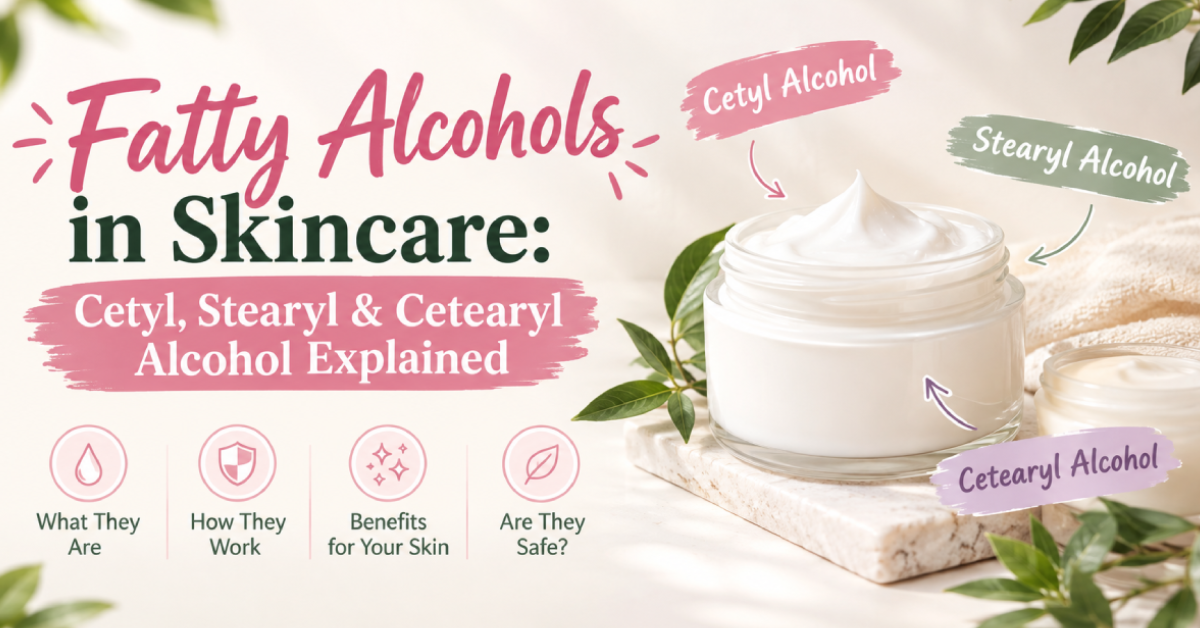
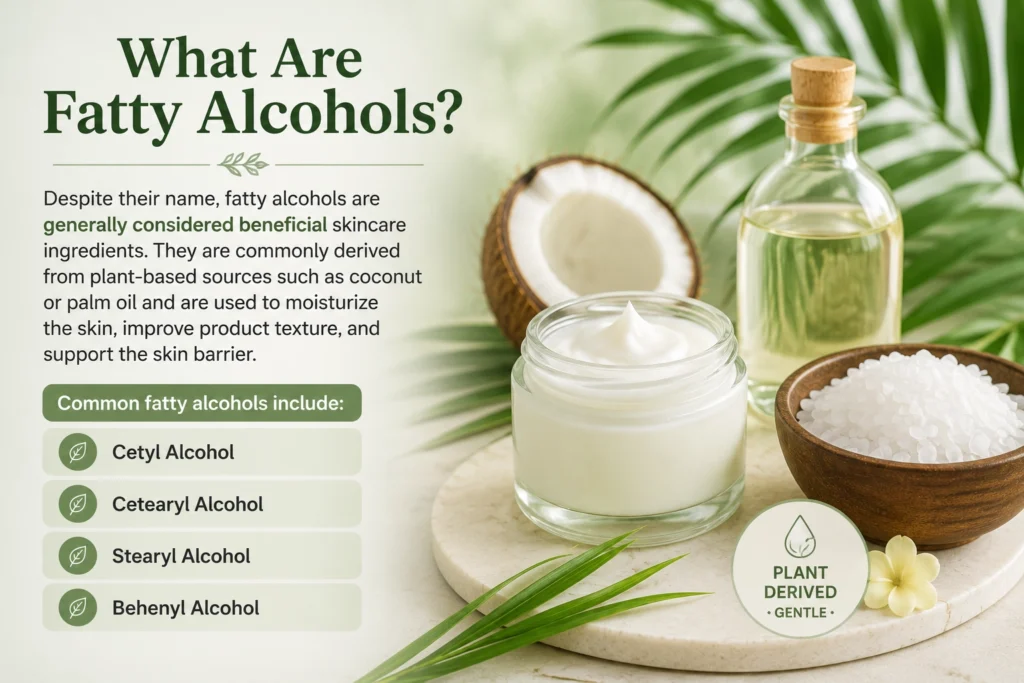
Despite their name, fatty alcohols are generally considered beneficial skincare ingredients. They are commonly derived from plant-based sources such as coconut or palm oil and are used to moisturize the skin, improve product texture, and support the skin barrier.
Common fatty alcohols include:
- Cetyl Alcohol
- Cetearyl Alcohol
- Stearyl Alcohol
- Behenyl Alcohol
These ingredients act as emollients, helping to soften the skin, reduce moisture loss, and create a smoother feel without stripping away natural oils. They are often found in moisturizers, creams, and lotions designed for dry or sensitive skin.
For more information about cosmetic ingredients, you can refer to trusted resources like the INCI Decoder and the American Academy of Dermatology (AAD).
Benefits of Fatty Alcohols
- Help lock in moisture
- Support the skin barrier
- Make creams feel smooth
- Reduce moisture loss
- Suitable for most skin types
People with dry or sensitive skin often tolerate fatty alcohols very well.
What Is Denatured Alcohol?
Denatured alcohol, often listed as Alcohol Denat., is one of the most commonly discussed skincare ingredients.
It is frequently used in:
- Lightweight moisturizers
- Acne treatments
- Toners
- Sunscreens
- Fast-drying serums
Its main purpose is to help products dry quickly and improve the penetration of certain active ingredients.
However, products with high amounts of denatured alcohol may not be suitable for everyone.
For some people, frequent use may lead to:
- Dryness
- Tightness
- Temporary irritation
- Increased skin sensitivity
People with oily skin may tolerate these products better than those with dry or sensitive skin.
Good vs Bad Alcohols
Not all alcohols belong in the same category.
The table below highlights the key differences.
| Type of Alcohol | Examples | Main Purpose | Suitable For |
|---|---|---|---|
| Fatty Alcohols | Cetyl Alcohol, Cetearyl Alcohol, Stearyl Alcohol | Moisturize and soften skin | Most skin types |
| Drying Alcohols | Alcohol Denat., Ethanol, Isopropyl Alcohol | Quick drying, lightweight feel | Mainly oily skin, depending on the formula |
The most important thing to remember is that fatty alcohols generally support the skin barrier, while high concentrations of drying alcohols may cause irritation in some individuals.

Does Your Skin Type Matter?
Absolutely, your skin type plays a major role in deciding whether alcohol-containing skincare products are suitable.
Oily Skin
- People with oily or Ingredients for Acne-Prone Skin concerns may prefer lightweight products containing small amounts of drying alcohol, as they can help reduce excess oil and absorb quickly.
Dry Skin
- Dry skin usually benefits more from products containing moisturizing ingredients, including fatty alcohols, ceramides, and glycerin.
Sensitive Skin
- If your skin reacts easily, it’s often best to avoid products that contain large amounts of denatured alcohol, especially if it appears near the top of the ingredient list.
Learn to Read Ingredient Labels
Rather than avoiding products based on one ingredient, learn to evaluate the complete formula.
Reading ingredient labels helps you understand:
- Which type of alcohol is included
- The likely purpose of the ingredient
- Whether the product suits your skin type
- How different ingredients work together
Our guide on Skincare Labels Explained can help you better understand common skincare claims and ingredient lists before buying new products.
Similarly, understanding Fragrance-Free vs Unscented Skincare can help you identify products that may be more suitable for sensitive skin, especially if you’re trying to reduce potential irritants.
Is Alcohol-Free Skincare Always Better?
Many people assume that alcohol-free skincare is automatically the safest choice. However, that’s not always true.
A product without alcohol isn’t necessarily better than one that contains it. What matters most is the overall formulation, the concentration of ingredients, and whether the product suits your skin type.
For example, a moisturizer containing fatty alcohols can help strengthen the skin barrier, while another alcohol-free product may still contain ingredients that irritate sensitive skin.
Instead of looking for a single claim on the label, evaluate the complete ingredient list before making a decision.
Who Should Avoid Drying Alcohols?
While drying alcohols are useful in some skincare products, they aren’t ideal for everyone.
You may want to limit products with high amounts of denatured alcohol if you have:
- Dry skin
- Sensitive skin
- Eczema-prone skin
- Rosacea
- A damaged skin barrier
If your skin feels tight, flaky, or irritated after using a product, consider switching to gentler formulas with hydrating ingredients.
People with oily or acne-prone skin may tolerate small amounts of drying alcohol better, especially in lightweight sunscreens or acne treatments.
Ingredients That Work Well With Fatty Alcohols
Healthy skincare isn’t about avoiding one ingredient it’s about choosing balanced formulations.
Many products containing fatty alcohols also include ingredients such as:
- Ceramides
- Glycerin
- Hyaluronic Acid
- Niacinamide
- Panthenol
- Aloe Vera
These ingredients help maintain hydration, support the skin barrier, and reduce moisture loss.
If you’re looking for gentle products, exploring a Safe Skincare Ingredients List can help you understand which ingredients commonly support healthy skin.
Common Myths About Alcohol in Skincare
There are many misconceptions about alcohol in skincare. Here are some of the most common.
Myth 1: All alcohols are bad.
- False.
- Some alcohols, such as cetyl alcohol and cetearyl alcohol, are moisturizing ingredients that help improve skin texture.
Myth 2: Alcohol-free products are always better.
- Not necessarily.
- A product should be judged by its complete ingredient list, not by a single claim on the packaging.
Myth 3: Drying alcohols always damage skin.
- It depends.
- Products with small amounts of drying alcohol may work well for oily skin when used correctly.
Myth 4: Fatty alcohols clog pores.
- Generally, no.
- Most fatty alcohols are considered suitable for many skin types and are commonly used in moisturizers and creams.
How to Read Skincare Labels?
Understanding ingredient labels helps you choose products more confidently.
When reading labels:
- Check where alcohol appears in the ingredient list.
- Identify whether it’s a fatty alcohol or denatured alcohol.
- Look for hydrating ingredients that balance the formula.
- Consider your skin type before purchasing.
- Avoid judging a product based on one ingredient alone.
Learning How to Read Skincare Labels makes it easier to compare products and understand what you’re applying to your skin.

Tips for Choosing the Right Skincare Products
Before buying skincare products:
- Read the full ingredient list.
- Choose products based on your skin type.
- Introduce one new product at a time.
- Patch test if you have sensitive skin.
- Focus on the complete formulation rather than marketing claims.
If you also have sensitive skin, understanding Fragrance-Free vs Unscented Skincare can help you reduce exposure to unnecessary fragrance ingredients.
Final Thoughts
So, is alcohol in skincare bad? The answer is no; not all alcohols are harmful.While drying alcohols like denatured alcohol may not suit every skin type, fatty alcohols are often beneficial because they help moisturize and support the skin barrier.
The best approach is to read ingredient labels, understand your skin’s needs, and choose products based on their overall formulation rather than avoiding every ingredient with the word “alcohol”. A simple, well-balanced skincare routine is usually more effective than focusing on a single ingredient.
Frequently Asked Questions
1. Is alcohol in skincare always bad?
No. Some alcohols can dry the skin, while fatty alcohols help moisturize and support the skin barrier.
2. What are fatty alcohols?
Fatty alcohols, such as cetyl alcohol and cetearyl alcohol, are moisturizing ingredients commonly used in creams and lotions.
3. Is denatured alcohol harmful?
Not necessarily. It helps products absorb quickly but may cause dryness or irritation for some people, especially those with sensitive or dry skin.
4. Should I only buy alcohol-free skincare?
No. Alcohol-free skincare isn’t automatically better. The overall ingredient list and formulation are more important.
5. How can I identify different alcohols in skincare?
Read the ingredient list carefully. Ingredients like cetyl alcohol and cetearyl alcohol are fatty alcohols, while Alcohol Denat is a drying alcohol.
6. Which skin types should avoid drying alcohols?
People with dry, sensitive, eczema-prone, or rosacea-prone skin may prefer products with little or no drying alcohol.
7. Can oily skin use products with alcohol?
Some people with oily skin tolerate products containing small amounts of drying alcohol, especially lightweight sunscreens, toners, or acne treatments.