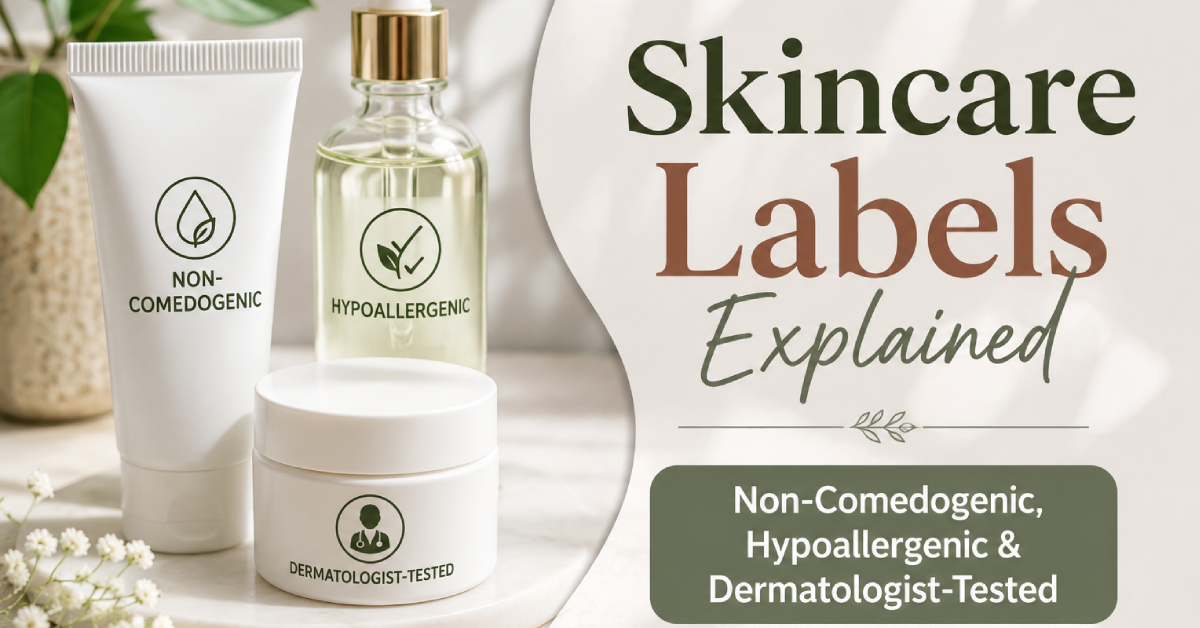
Choosing skincare products can feel overwhelming. Labels such as “dermatologist-tested,” “hypoallergenic,” and “non-comedogenic” appear on many products, but their meanings aren’t always clear. As a result, many people assume these claims guarantee that a product is safe or suitable for everyone.
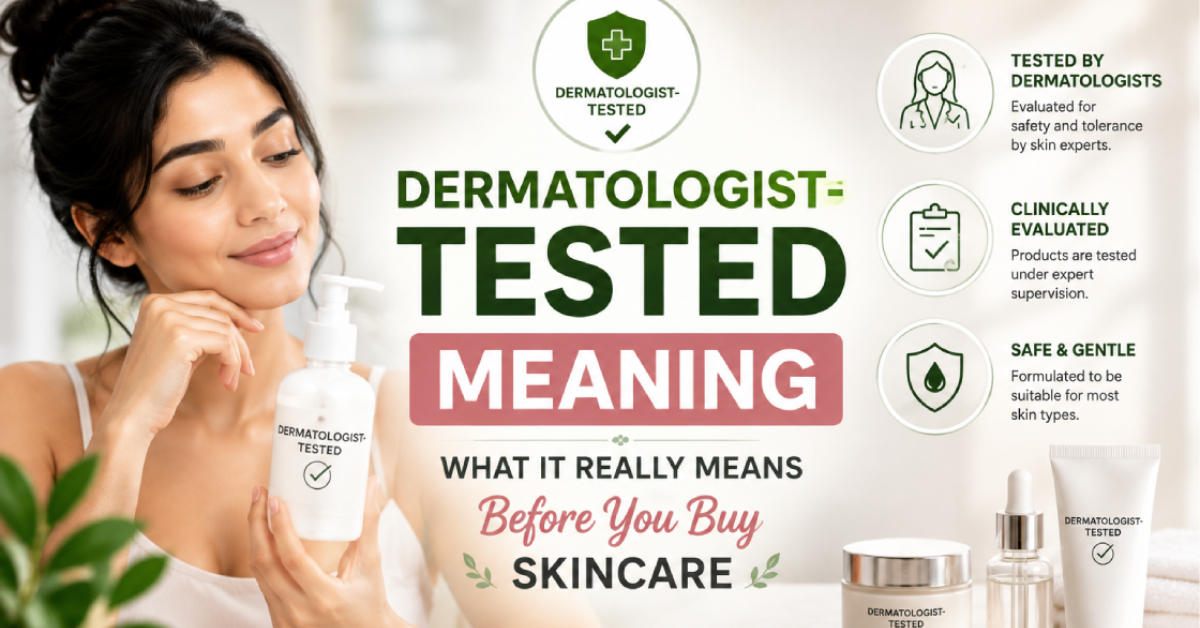
In reality, the dermatologist-tested meaning is more specific. It generally indicates that the product was tested under the supervision of a dermatologist or included dermatologist involvement during testing. However, it does not automatically mean the product is approved by dermatologists or guaranteed to be free from irritation.
Understanding skincare labels helps you make informed decisions instead of relying solely on marketing claims. Learning Skincare Labels Explained is one of the best ways to understand what product labels really mean before adding new products to your routine.
In this guide, you’ll learn what does dermatologist tested mean, how these products are evaluated, how the claim differs from similar skincare labels, and what you should check before buying.
What Does Dermatologist-Tested Mean?
The dermatologist-tested meaning refers to products that have undergone testing involving a licensed dermatologist. The dermatologist may supervise the testing process, evaluate participants’ skin reactions, or review the study results.
However, there is no universal standard that defines exactly how dermatologist testing must be conducted. Testing methods can vary between brands and manufacturers. Because of this, seeing “dermatologist-tested” on a product doesn’t automatically mean it is suitable for every skin type.
Instead, it means the product has been evaluated in some way with dermatologist involvement.
Does Dermatologist-Tested Mean Dermatologist Approved?
No. This is one of the biggest misconceptions among skincare consumers.
A product labeled dermatologist-tested does not necessarily mean:
- Every dermatologist recommends it.
- It is completely free from irritation.
- It is suitable for all skin types.
- It has been approved by the American Academy of Dermatology (AAD).
Instead, it simply indicates that dermatologist involvement was part of the testing process.
Your skin type, allergies, and existing skin conditions still play an important role in determining whether a product is right for you.

How Are Dermatologist-Tested Products Evaluated?
Although testing methods vary, many products follow a similar evaluation process.
The product may be:
- Applied by volunteers under controlled conditions.
- Observed for irritation, redness, or allergic reactions.
- Reviewed by a licensed dermatologist.
- Assessed for skin compatibility before release.
The number of participants, testing duration, and evaluation methods may differ between manufacturers.
This is why reading the full ingredient list remains just as important as reading the marketing claims on the packaging.
Dermatologist-Tested vs Other Common Skincare Labels
Many skincare labels sound similar but have different meanings.
| Label | What It Generally Means | Important Note |
|---|---|---|
| Dermatologist-Tested | Tested with dermatologist involvement | Doesn’t guarantee approval |
| Hypoallergenic | Designed to reduce allergy risk | Allergies are still possible |
| Non-Comedogenic | Formulated to reduce pore clogging | Doesn’t guarantee acne prevention |
| Fragrance-Free | No added fragrance ingredients | May still have a natural scent |
| Unscented | Little or no noticeable scent | May contain masking fragrance ingredients |
Understanding these differences helps you make better skincare decisions.
Why Skincare Labels Can Be Misleading
Product labels are designed to communicate useful information, but they don’t always tell the complete story.
For example, terms such as:
- Dermatologist-tested
- Natural
- Clean beauty
- Sensitive skin
- Gentle formula
do not have identical regulatory definitions across every country.
Rather than relying on one claim, evaluate the product as a whole.
Learning Skincare Labels Explained helps you understand what these terms actually mean and how they relate to your skin’s needs.
Should Sensitive Skin Only Buy Dermatologist-Tested Products?
Not necessarily.
While dermatologist-tested products may be a good starting point, people with sensitive skin should also consider:
- The complete ingredient list.
- Their own skin history.
- Whether the product contains fragrance or drying alcohol.
- Patch testing before full use.
A product that works well for one person may not work the same way for another.
Understanding Related Skincare Claims
The dermatologist-tested meaning becomes much clearer when compared with other common skincare labels.
Hypoallergenic Meaning
- The term Hypoallergenic Meaning generally refers to products formulated to reduce the likelihood of allergic reactions.
- However, no skincare product can completely eliminate the possibility of allergies.
Non-Comedogenic Meaning
- The Non-Comedogenic Meaning refers to products formulated to reduce the likelihood of clogging pores.
- Although these products may be beneficial for oily or acne-prone skin, they do not guarantee that breakouts will never occur.
Fragrance-Free vs Unscented
- Another commonly misunderstood label is Fragrance-Free vs Unscented.
- Fragrance-free products contain no added fragrance ingredients, while unscented products may still include masking agents to neutralize odor.
- Understanding these differences allows you to choose products that better match your skin type and sensitivity.
Common Myths About Dermatologist-Tested Products
Many skincare shoppers misunderstand what the “dermatologist-tested” label actually means. Let’s clear up some common myths.
Myth 1: Dermatologist-Tested Means Dermatologist Approved
- This is false.
- A dermatologist may have supervised or participated in product testing, but that does not mean every dermatologist recommends the product.
Myth 2: Dermatologist-Tested Products Never Cause Irritation
- No skincare product works perfectly for everyone.
- Your skin type, allergies, and sensitivity all affect how your skin responds to a product.
- Even dermatologist-tested products may cause irritation for some individuals.
Myth 3: Dermatologist-Tested Means Better Quality
- Not necessarily.
- A product’s effectiveness depends on its ingredients, formulation, and whether it suits your skin—not simply on one marketing claim.

What Should You Check Before Buying Skincare?
Instead of relying only on front-label claims, evaluate the product carefully.
Consider these factors:
- Read the full ingredient list.
- Check whether the product matches your skin type.
- Look for well-known skin-supporting ingredients.
- Avoid ingredients that may irritate your skin.
- Patch test before applying a new product to your face.
Taking a few extra minutes to read labels can help you make better skincare decisions.
Why Ingredient Lists Matter More Than Marketing Claims
Words like “gentle,” “natural,” and “dermatologist-tested” can be helpful, but they don’t tell the whole story.The ingredient list provides much more useful information.
When reading labels, pay attention to:
- Active ingredients
- Fragrance
- Drying alcohols
- Preservatives
- Ingredients near the top of the list
Learning Skincare Labels Explained makes it easier to compare products objectively instead of relying on advertising alone.
Is Alcohol in Skincare Always Bad?
- Another common misunderstanding involves alcohol.
- Many people assume every alcohol is harmful, but that’s not true.
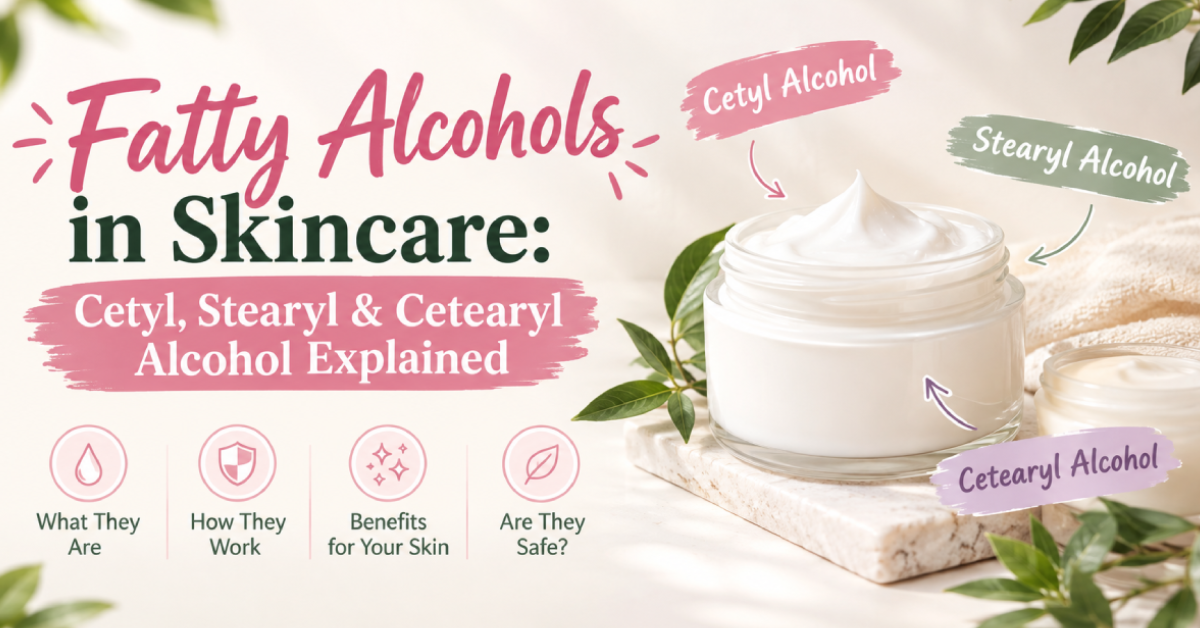
- Some fatty alcohols, such as cetyl alcohol and cetearyl alcohol, help moisturize the skin and improve product texture.
- Others, like denatured alcohol, may cause dryness for some people, especially if used frequently or in high concentrations.
- Understanding Is Alcohol in Skincare Bad? can help you choose products based on ingredients instead of common myths.
What Dermatologists Often Recommend
Many dermatologists encourage consumers to focus on healthy skincare habits rather than marketing labels alone.
General recommendations include:
- Choose products suitable for your skin type.
- Introduce one new product at a time.
- Wear sunscreen daily.
- Moisturize consistently.
- Avoid over-exfoliating.
The American Academy of Dermatology (AAD) also emphasizes reading product information carefully and following a consistent skincare routine based on your skin’s needs.
Quick Buying Checklist
Before purchasing any skincare product, ask yourself:
| Question | Why It Matters |
|---|---|
| Does it suit my skin type? | Reduces the chance of irritation. |
| Have I read the ingredient list? | Helps identify potential irritants. |
| Does it contain unnecessary fragrance? | Fragrance may bother sensitive skin. |
| Is the formula appropriate for my concerns? | Different products target different skin needs. |
| Will I patch test first? | Helps reduce the risk of unexpected reactions. |
Final Thoughts
Understanding the dermatologist-tested meaning helps you become a smarter skincare shopper.
A dermatologist-tested label simply indicates that a dermatologist was involved in some part of the testing process. It does not guarantee approval, safety for every skin type, or better product quality.
Instead of relying on a single claim, read the ingredient list, understand your skin type, and choose products with well-researched ingredients. A thoughtful, consistent skincare routine is often more valuable than following marketing trends.
Frequently Asked Questions
1. What does dermatologist-tested mean?
It means a product has been tested with the involvement or supervision of a dermatologist. Testing methods may vary between brands.
2. Does dermatologist-tested mean dermatologist approved?
No. Dermatologist-tested does not automatically mean the product has been approved or recommended by all dermatologists.
3. Is dermatologist-tested the same as hypoallergenic?
No. Hypoallergenic generally means a product is formulated to reduce the risk of allergic reactions, while dermatologist-tested refers to the testing process.
4. Should people with sensitive skin only buy dermatologist-tested products?
Not necessarily. People with sensitive skin should also read ingredient lists, patch test new products, and choose formulas that match their skin type.
5. Are dermatologist-tested products safe for acne-prone skin?
Some are, but always check whether the product is also labeled non-comedogenic and contains ingredients suitable for acne-prone skin.
6. Why should I read skincare labels?
Reading labels helps you understand active ingredients, identify potential irritants, and choose products that suit your skin’s needs.
7. Can dermatologist-tested products still cause irritation?
Yes. Every person’s skin is different, so even dermatologist-tested products may cause irritation or allergic reactions in some individuals.