When you see the word “alcohol” on a skincare label, it is easy to assume the ingredient will dry out your skin. But the word alcohol describes a broad group of ingredients, and they do not all behave the same way.
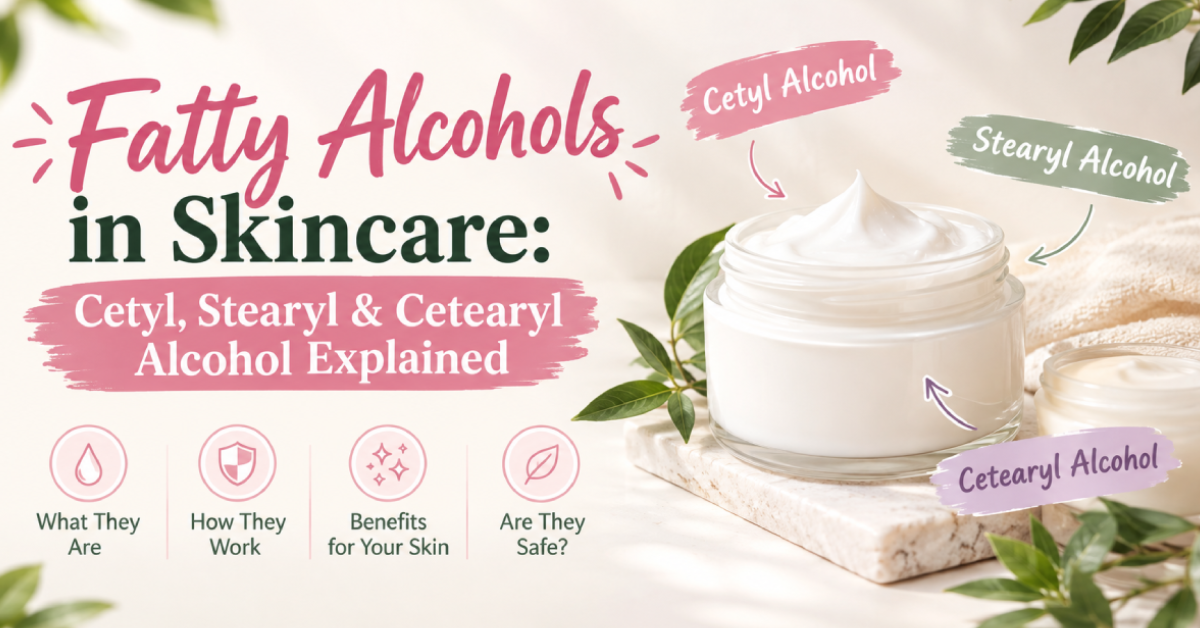
Fatty Alcohols in Skincare are different from commonly discussed drying alcohols such as ethanol or denatured alcohol. Ingredients such as cetyl alcohol, stearyl alcohol, and cetearyl alcohol are often used to improve the texture, consistency, and stability of creams and lotions.
Understanding these ingredients can make skincare labels easier to read and help you make more informed choices for your skin.
What Are Fatty Alcohols in Skincare?
Fatty alcohols in skincare are long-chain alcohols commonly used in cosmetic formulations. They can act as emollients, thickeners, stabilizers, and texture-enhancing ingredients.
Unlike some simple alcohols that evaporate quickly, fatty alcohols have a different structure and are generally waxy or solid at room temperature.
Common examples include:
- Cetyl alcohol
- Stearyl alcohol
- Cetearyl alcohol
- Behenyl alcohol
- Lauryl alcohol
You may find these ingredients in moisturizers, creams, lotions, cleansers, hair conditioners, and other personal-care products.
Their presence on an ingredient list does not automatically mean a product will dry your skin.
Why Are Fatty Alcohols Used in Skincare?
Fatty alcohols can perform several useful jobs in a cosmetic formula.
They may help make a product thicker, smoother, and easier to spread. They can also help stabilize emulsions, which are formulas that combine ingredients such as oil and water.
Depending on the specific fatty alcohol and formulation, they may also provide an emollient effect, leaving the skin feeling softer. This is why they are commonly found in moisturizers and other products designed to have a creamy texture.
The exact function depends on the ingredient, its concentration, and the rest of the formula.
Cetyl Alcohol, Stearyl Alcohol, and Cetearyl Alcohol
Three names you may see frequently are cetyl alcohol, stearyl alcohol, and cetearyl alcohol.
- Cetyl Alcohol
Cetyl alcohol is a fatty alcohol commonly used as an emollient, thickener, and consistency-enhancing ingredient.
It can help give creams and lotions a smooth, rich texture.
- Stearyl Alcohol
Stearyl alcohol in skincare is another long-chain fatty alcohol used to improve the consistency and feel of cosmetic products.
It can function as an emollient and help provide structure to creams and lotions.
- Cetearyl Alcohol
Cetearyl alcohol is generally a mixture of cetyl alcohol and stearyl alcohol.
It is widely used in moisturizers, conditioners, lotions, and other emulsion-based products because it can contribute to thickness, stability, and texture.
Fatty Alcohols at a Glance
| Ingredient | Common Function | Where You May Find It |
|---|---|---|
| Cetyl alcohol | Emollient, thickener, consistency agent | Creams and lotions |
| Stearyl alcohol | Emollient, consistency agent | Moisturizers and creams |
| Cetearyl alcohol | Emollient, thickener, stabilizer | Creams, lotions, conditioners |
| Behenyl alcohol | Texture and consistency support | Creams and lotions |
| Lauryl alcohol | Emollient and formulation aid | Some cosmetic products |
The role of an ingredient can vary depending on the complete formulation.
Are Fatty Alcohols Bad for Your Skin?
For most people, fatty alcohols are not inherently bad for the skin.
They are widely used in cosmetic products because they can improve both the texture of a formula and the way it feels on the skin.
However, individual skin reactions are possible. Someone can react to almost any cosmetic ingredient, particularly if they have a known sensitivity or allergy. If a product repeatedly causes burning, itching, redness, or irritation, stop using it and consider discussing the reaction with a dermatologist.
It is also important not to blame one ingredient automatically. A skincare product contains multiple ingredients, and the complete formulation matters.

Fatty Alcohols for Sensitive Skin
People with sensitive skin often want to know whether they should avoid fatty alcohols.
In general, fatty alcohols for sensitive skin are not automatically a problem. Many people with sensitive skin can use products containing cetyl, stearyl, or cetearyl alcohol without difficulty.
However, sensitive skin can react to many different ingredients.
If your skin is easily irritated, consider choosing a simple routine and introducing new products one at a time. This makes it easier to identify what may be causing a reaction.
You may also prefer fragrance-free skincare if fragrance is a known trigger for your skin.
Remember that fragrance-free does not mean fatty-alcohol-free. A product can contain cetearyl alcohol and still be fragrance-free.
Fatty Alcohols vs Drying Alcohols
This is where much of the confusion comes from.
When people search Is Alcohol in Skincare Bad?, they are often thinking about drying alcohols rather than fatty alcohols.
Ingredients such as ethanol and denatured alcohol can provide a lightweight or quick-drying feel and are used for different formulation purposes. Depending on the product and skin type, they may contribute to dryness or irritation.
Fatty alcohols have a different chemical structure and are commonly used for emollience, thickening, consistency, and formulation stability.
So, simply seeing “alcohol” on a skincare label is not enough to determine whether an ingredient is drying.
The specific ingredient name matters.
Can Fatty Alcohols Clog Pores?
Some people avoid fatty alcohols because they are concerned about clogged pores or acne.
However, the presence of a fatty alcohol does not automatically mean that a product will clog pores.
Whether a product contributes to breakouts can depend on the complete formulation, the concentration of individual ingredients, how the product is used, and the individual’s skin.
If you have acne-prone skin, introduce new products gradually rather than changing several products at once.
This gives you a better chance of identifying what works for your skin.
Fatty Alcohols and a Damaged Skin Barrier
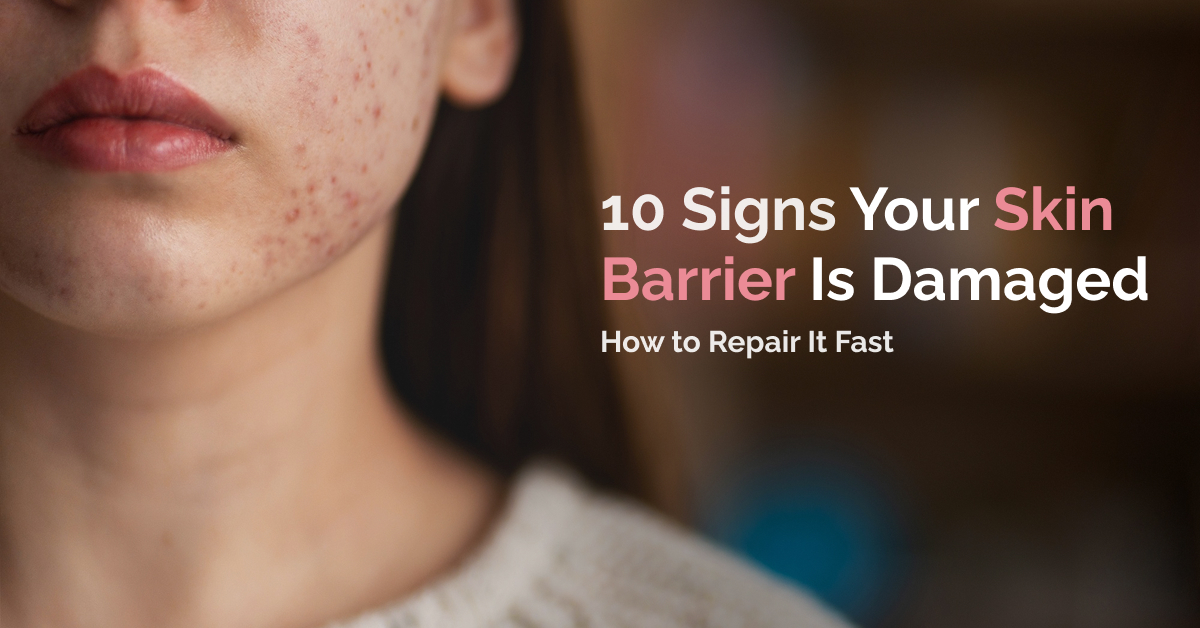
A Damaged Skin Barrier can make the skin feel dry, tight, rough, irritated, or more sensitive than usual.
Moisturizing products often contain emollient and occlusive ingredients that help improve the skin’s moisture balance and reduce the feeling of dryness.
Fatty alcohols may contribute to the texture and emollient properties of some moisturizing formulations, but they should not be considered a standalone treatment for a damaged skin barrier.
If your skin barrier feels compromised, a simple routine is often easier to tolerate: gentle cleansing, moisturizing, and daily sun protection.
Avoid adding multiple strong active ingredients at the same time if your skin is already irritated.

How to Read Fatty Alcohols on a Skincare Label
When reading an ingredient list, look for names such as:
- Cetyl alcohol
- Stearyl alcohol
- Cetearyl alcohol
- Behenyl alcohol
Do not automatically classify these ingredients as drying alcohols.
You should also look at the ingredients around them and consider the purpose of the product.
This is where a Safe Skincare Ingredients List can be useful as a learning resource, but remember that there is no single ingredient list that works perfectly for every person.
Your skin type, concerns, sensitivities, and the complete formulation all matter.
Should You Avoid Fatty Alcohols?
Most people do not need to avoid fatty alcohols simply because their names contain the word “alcohol.”
If your skin tolerates a product containing cetyl alcohol, stearyl alcohol, or cetearyl alcohol, there is generally no reason to remove it based only on the ingredient name.
Instead, pay attention to how your skin responds.
If a specific product causes persistent irritation or breakouts, look at the entire ingredient list rather than assuming the fatty alcohol is responsible.
Fatty Alcohols and Fragrance-Free vs Unscented Skincare
It is useful to understand the difference between Fragrance-Free vs Unscented Skincare when choosing products for sensitive skin.
“Fragrance-free” generally means the product is formulated without added fragrance ingredients. “Unscented” refers more to the product’s noticeable smell and does not necessarily mean that fragrance-related ingredients are absent.
This distinction is separate from fatty alcohols.
A moisturizer can be fragrance-free while containing cetearyl alcohol, cetyl alcohol, or stearyl alcohol.
If you are trying to reduce potential irritants, read the full ingredient list rather than relying only on front-label claims.
Final Thoughts
Fatty Alcohols in Skincare are often misunderstood because of the word “alcohol.”
Cetyl alcohol, stearyl alcohol, and cetearyl alcohol are different from drying alcohols and are commonly used to improve the texture, consistency, and stability of skincare products.
For most people, these ingredients are well tolerated. Rather than avoiding every ingredient containing the word “alcohol,” identify the specific ingredient and consider how the complete product works for your skin.
If you experience persistent burning, itching, redness, swelling, or a rash after using a product, discontinue it and seek professional medical advice when appropriate.
Frequently Asked Questions
What are fatty alcohols in skincare?
Fatty alcohols in skincare are long-chain alcohols used in cosmetic formulations for functions such as emollience, thickening, consistency, and stabilization. Common examples include cetyl alcohol, stearyl alcohol, and cetearyl alcohol.
Are fatty alcohols bad for your skin?
Generally, no. Fatty alcohols are widely used in skincare and are well tolerated by many people. However, individual sensitivities can occur.
Is cetyl alcohol safe for skin?
Cetyl alcohol is a commonly used cosmetic ingredient and is generally well tolerated. It can help improve the texture and consistency of creams and lotions.
Is cetearyl alcohol good for skin?
Cetearyl alcohol can function as an emollient, thickener, and stabilizer. It is commonly found in moisturizers, lotions, and conditioners.
Is stearyl alcohol safe for sensitive skin?
Stearyl alcohol is different from commonly used drying alcohols and is generally well tolerated. However, sensitive skin can react to individual ingredients, so monitor your skin’s response.
Can fatty alcohols clog pores?
Not automatically. Whether a product contributes to clogged pores depends on its complete formulation and individual skin response.
Are fatty alcohols the same as drying alcohol?
No. Fatty alcohols such as cetyl, stearyl, and cetearyl alcohol have different structures and functions from alcohols such as ethanol and denatured alcohol.
What is the difference between cetyl alcohol and cetearyl alcohol?
Cetyl alcohol is a specific fatty alcohol, while cetearyl alcohol is generally a mixture of cetyl alcohol and stearyl alcohol.
Are fatty alcohols suitable for dry skin?
They can be useful in moisturizing formulations because they can contribute to a soft, smooth skin feel and help improve the texture of creams and lotions. Individual tolerance still matters.
Should I avoid fatty alcohols if I have sensitive skin?
Not necessarily. Many people with sensitive skin tolerate fatty alcohols. If your skin is reactive, introduce products gradually and pay attention to the complete ingredient list.