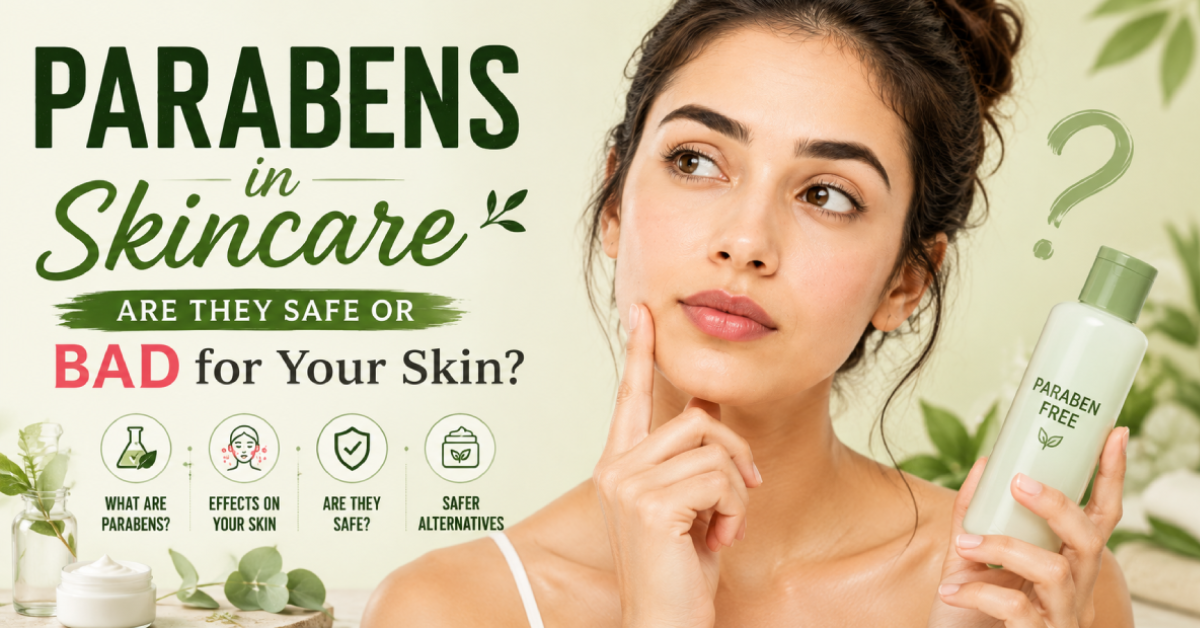
If you’ve ever checked a skincare label, you’ve probably seen the word parabens. They are preservatives used in cosmetics and personal-care products to help prevent the growth of bacteria, yeast, and mold.
But social media has made parabens a confusing topic. Some people avoid them completely, while others say they are safe when used correctly.
So, are parabens bad for skin? The answer isn’t simply yes or no. Their safety depends on the specific paraben, concentration, product formulation, and how the ingredient is regulated.
Understanding parabens in skincare can help you make informed choices instead of automatically judging a product by one ingredient.
What Are Parabens in Skincare?
Parabens are a group of preservatives used to protect cosmetic products from microbial contamination.
Water-based products, such as creams, lotions, cleansers, and some makeup products, can provide an environment where microorganisms may grow. Preservatives help control that risk.
Common parabens found on ingredient labels include:
- Methylparaben
- Propylparaben
- Butylparaben
- Ethylparaben
- Isobutylparaben
You may see these names listed near the end of an ingredient list because preservatives are generally used in relatively small amounts.
Why Are Parabens Used in Cosmetics?
The main purpose of parabens in cosmetics is preservation.
Without an effective preservation system, a product may become contaminated during storage or repeated use.
Parabens can help:
- Prevent microbial growth
- Extend product shelf life
- Maintain product quality
- Protect water-based formulations
This means preservatives aren’t automatically “bad” ingredients. In many formulations, they serve an important safety function.
Are Parabens Bad for Skin?
For most people, parabens are not automatically harmful simply because they are preservatives.
- However, some individuals may experience irritation or allergic contact dermatitis from certain cosmetic ingredients, including preservatives.
- If a product consistently causes redness, itching, burning, or a rash, stop using it and consider discussing the reaction with a dermatologist.
It’s also important to distinguish between skin irritation and broader claims about ingredient safety. An ingredient can be unsuitable for a particular person without being universally unsafe.
Are Parabens Safe for Skin?
The question are parabens safe for skin has been studied for many years.
- Regulatory authorities evaluate cosmetic ingredients based on factors such as concentration, exposure, and available safety evidence. Different countries may have different restrictions for individual parabens.
- The safety of a cosmetic product also depends on the complete formulation rather than one ingredient viewed in isolation.
For consumers, the practical approach is to consider the product’s intended use, follow its directions, and pay attention to how your own skin responds.
Parabens in Cosmetics: Where Are They Found?
Parabens in cosmetics can appear in a wide range of personal-care products.
You may encounter them in:
- Moisturizers
- Facial cleansers
- Sunscreens
- Makeup
- Body lotions
- Shampoos
- Conditioners
Not every product contains parabens. Many brands now use alternative preservation systems, while others continue to use certain parabens depending on the formulation and market.
Common Parabens and Their Purpose
| Paraben | Main Function | Where You May Find It |
|---|---|---|
| Methylparaben | Preservative | Creams and lotions |
| Ethylparaben | Preservative | Cosmetics and skincare |
| Propylparaben | Preservative | Creams and personal care |
| Butylparaben | Preservative | Some cosmetic formulations |
| Isobutylparaben | Preservative | Certain personal-care products |
The presence of a paraben doesn’t tell you everything about a product. The concentration and overall formulation also matter.
Why Do Some People Avoid Parabens?
The growing interest in paraben-free skincare comes from concerns about potential health effects, allergies, environmental questions, and preference for alternative preservatives. Some consumers simply feel more comfortable choosing products without parabens.
That’s a personal preference, but “paraben-free” does not automatically mean a product is safer, more effective, or better for every skin type.
A paraben-free formula still needs an effective preservation system.
What Does Paraben-Free Skincare Mean?
Paraben-free skincare generally means that the product has been formulated without parabens.
However, this label doesn’t mean the product contains no preservatives.
A product still needs protection against microbial contamination, so manufacturers may use other preservatives or preservation methods. This is why it’s useful to read the complete ingredient list rather than focusing only on the front of the package.
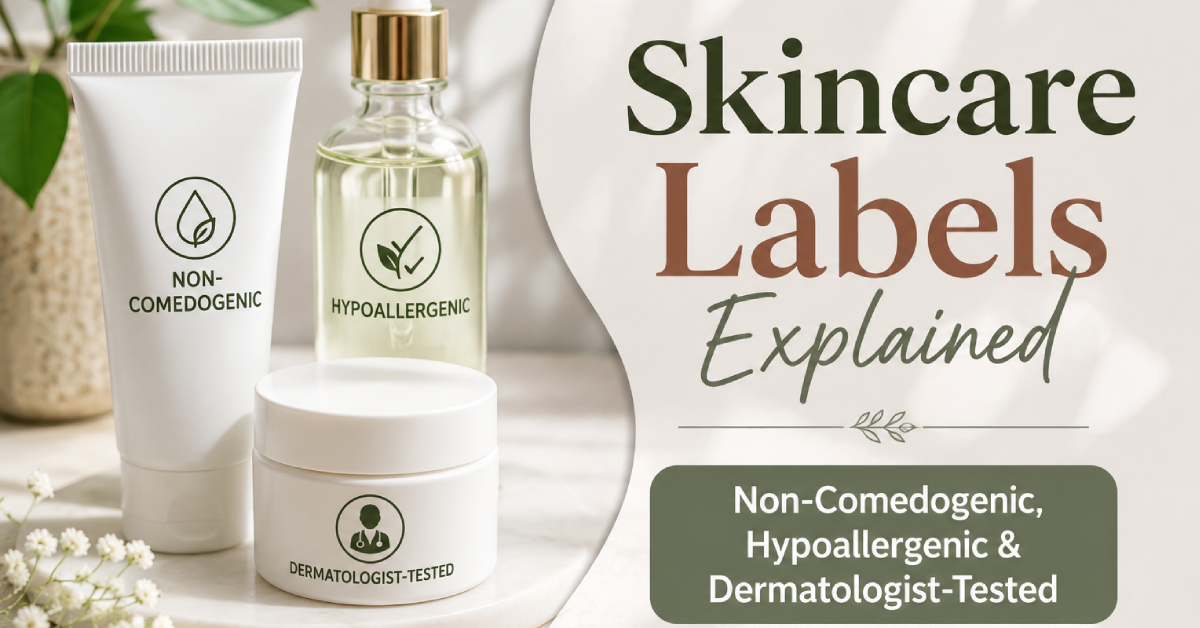
For more information about understanding product claims, see Skincare Labels Explained.
Parabens and Sensitive Skin
If you have sensitive skin, don’t assume that removing one ingredient will solve every irritation problem.
Other ingredients can also cause reactions, including:
- Fragrance
- Essential oils
- Certain preservatives
- Strong exfoliating acids
- Some cleansing agents
If your skin frequently becomes red or irritated, keep your routine simple and introduce new products one at a time.
A patch test can also help identify whether a particular product causes a reaction, although it cannot guarantee that a product will never irritate your skin.
Parabens vs Other Skincare Concerns
Skincare ingredient safety isn’t limited to parabens.
For example, some people are concerned about drying alcohols, while others are sensitive to fragrance.
If you’re wondering if alcohol in skincare is bad, remember that not every alcohol has the same function. Fatty alcohols such as cetyl alcohol and cetearyl alcohol are different from drying alcohols such as denatured alcohol.
Similarly, understanding the difference between Fragrance-Free and Unscented can be helpful if fragrance is a concern for your skin.
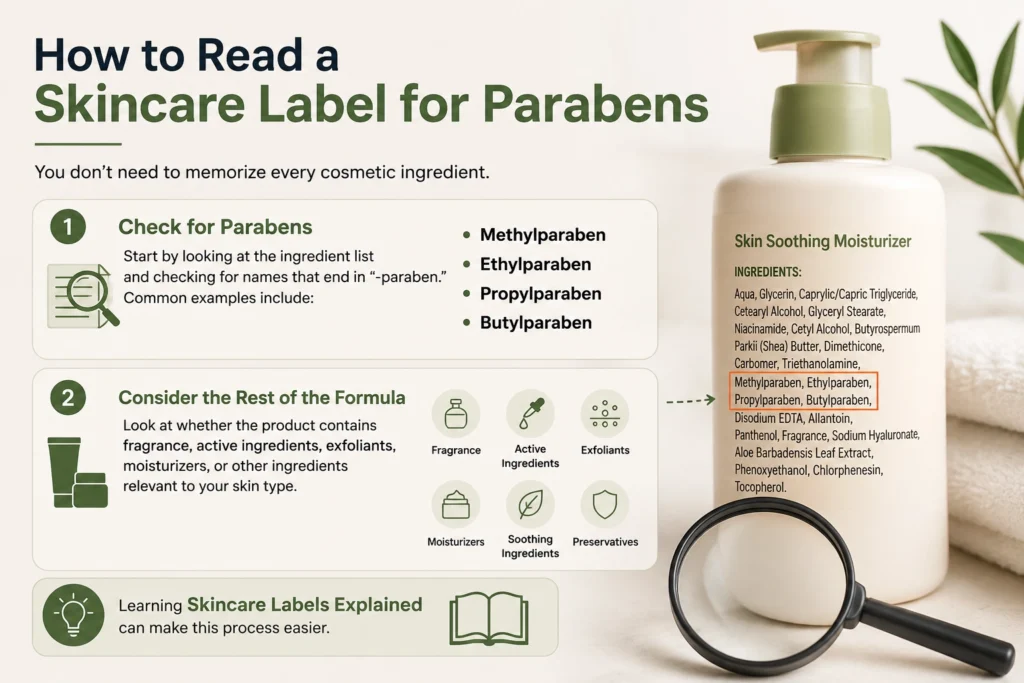
How to Read a Skincare Label for Parabens
You don’t need to memorize every cosmetic ingredient.
Start by looking at the ingredient list and checking for names that end in “-paraben.”
Common examples include:
- Methylparaben
- Ethylparaben
- Propylparaben
- Butylparaben
Then consider the rest of the formula.
Look at whether the product contains fragrance, active ingredients, exfoliants, moisturizers, or other ingredients relevant to your skin type.
Learning Skincare Labels Explained can make this process easier.
Should You Avoid Parabens Completely?
There isn’t a universal need for everyone to avoid parabens.
Some people prefer paraben-free skincare, while others are comfortable using products containing approved preservatives.
Your choice can depend on:
- Personal preference
- Skin sensitivity
- Product formulation
- Advice from a qualified dermatologist
- Your response to the product
The important thing is to avoid making skincare decisions based solely on social media claims.
What About “Natural” or Non-Toxic Skincare?
The phrase Non-Toxic Skincare Products is popular online, but “natural” doesn’t automatically mean safer for everyone.
- Plant extracts and essential oils can also cause irritation or allergic reactions.
- Likewise, synthetic ingredients aren’t automatically harmful.
Instead of judging ingredients only by whether they are natural or synthetic, consider their purpose, concentration, safety evidence, and your individual skin needs.
When Should You See a Dermatologist?
If you develop persistent redness, itching, swelling, burning, or a rash after using skincare, stop using the suspected product.
If the reaction continues or becomes severe, seek medical advice.
A dermatologist can help determine whether you’re experiencing irritation, an allergic reaction, acne, eczema, or another skin condition.
The American Academy of Dermatology (AAD) provides consumer information about many common skin concerns and encourages people to seek professional evaluation when skin problems persist.
Final Thoughts
Understanding parabens in skincare doesn’t have to be complicated.
Parabens are preservatives used to protect cosmetic products from microbial contamination. Some consumers prefer paraben-free skincare, while others use products containing parabens without problems. The most useful approach is to look beyond individual ingredients and understand the complete product formulation.
Read the label, consider your skin type, introduce new products gradually, and don’t assume that “natural,” “clean,” or “paraben-free” automatically means better. Good skincare is about making informed choices based on reliable information and your skin’s individual needs.
Frequently Asked Questions
1. Are parabens bad for skin?
Not necessarily. Parabens are preservatives, and their effect depends on the specific ingredient, concentration, formulation, and individual skin sensitivity.
2. Are parabens safe for skin?
Approved parabens are regulated according to applicable cosmetic safety standards. However, individual people can still experience irritation or allergic reactions to cosmetic ingredients.
3. What are the most common parabens in skincare?
Common examples include methylparaben, ethylparaben, propylparaben, and butylparaben.
4. What does paraben-free skincare mean?
It generally means the product has been formulated without parabens. It may still contain other preservatives.
5. Are parabens found in cosmetics?
Yes. Parabens in cosmetics may be used as preservatives in products such as creams, lotions, makeup, and personal-care products.
6. Should people with sensitive skin avoid parabens?
Not everyone with sensitive skin needs to avoid parabens. If you experience repeated irritation, discuss your symptoms with a dermatologist and consider simplifying your routine.
7. Is paraben-free skincare always better?
No. A paraben-free label doesn’t automatically mean a product is safer or more effective. The entire formulation matters.
8. How can I identify parabens on a skincare label?
Look for ingredient names ending in “-paraben,” such as methylparaben, propylparaben, or butylparaben.
9. Are natural skincare products always safer than products with parabens?
No. Natural ingredients can also cause irritation or allergies. Ingredient safety depends on the specific ingredient, concentration, formulation, and individual response.
10. What should I do if a skincare product causes irritation?
Stop using the suspected product. If the reaction persists, becomes severe, or includes significant swelling or difficulty breathing, seek appropriate medical care promptly.